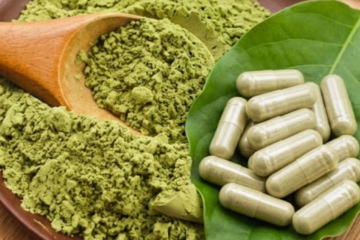
Red Kratom is one of the most recognized color categories in the Kratom market, appearing across offline and online stores. From Red Bali and Red Maeng Da Kratom to Red Dragon and Red Indo Kratom, this category includes several well-known strain names that often raise questions about their origins, characteristics, and differences.
This Red Kratom guide brings those details together in one place, covering where Red Kratom comes from, how the red color category is understood, which popular strains are commonly compared, and what buyers should check before choosing a product.
Table Of Contents
- What Is Red Kratom?
- The Key Stages Behind Red Kratom Harvesting And Processing
- Alkaloid Profile Of Red Kratom
- Red Kratom Powder, Capsules, And Extract: Format Breakdown
- Red Kratom Strain Categories Explained
- Red Kratom vs Other Kratom Color Categories: What’s The Difference?
- Important Things To Check Before Buying Red Kratom
- Why Buy Kratom Bulk USA Can Be Your Go-To Choice For Red Kratom Strains?
- Red Kratom FAQs: Simple Answers For Buyers
- Key Takeaways On Red Kratom
What Is Red Kratom?
Red Kratom refers to Kratom varieties grouped under the red color category, commonly associated with mature leaves of the Mitragyna speciosa tree. Native to the tropical rainforests of Southeast Asia, these leaves are often identified by the reddish hue found in the veins and central stem before drying and processing.
Why Is It Called Red Kratom?
It receives this name because the physical veins running through the underside of the leaf, along with its central stem, turn a visible red color as the leaf matures.
The Key Stages Behind Red Kratom Harvesting And Processing
Red Kratom is prepared through a series of simple steps, from leaf selection to drying, processing, and packaging. Let’s take a closer look at the whole process:
- Selective leaf harvesting: Farmers handpick mature Mitragyna speciosa leaves when the veins and central stems are red-toned.
- Washing the leaves: The harvested leaves are washed to remove dirt, dust, and unwanted plant material.
- Sorting for quality: Cleaned leaves are sorted so damaged, uneven, or unsuitable leaves do not move forward in the process.
- Curing or fermentation: Some Red Kratom leaves go through a curing or fermentation stage, where leaves are kept in controlled conditions for a set period before drying.
- Drying stage: The leaves are then dried under sunlight, UV exposure, or controlled indoor airflow, depending on the producer’s method.
- Final moisture reduction: Drying continues until the leaves lose excess moisture and become ready for milling.
- Grinding into powder: Fully dried leaves are ground into fine Kratom powder.
- Screening and consistency check: The powder is checked for even particle size and overall consistency.
- Packaging and labeling: The finished Red Kratom powder is packed, labeled, and prepared for sale in powder, capsule, or extract formats.
Alkaloid Profile Of Red Kratom
- Like all Kratom varieties, Red Kratom contains naturally occurring alkaloids found in the Mitragyna speciosa plant.
- Mitragynine is generally recognized as the most abundant alkaloid in Red Kratom, while the overall profile also includes other naturally occurring compounds such as speciociliatine, paynantheine, speciogynine, and 7-hydroxymitragynine.
- The exact alkaloid composition develops as the leaves mature and continues to be influenced by factors such as growing conditions, harvesting practices, and processing methods.
- As Red Kratom represents a broad color category rather than a single strain, alkaloid levels can differ between varieties such as Red Bali, Red Maeng Da, Red Indo, and Red Thai Kratom.
Red Kratom Powder, Capsules, And Extract: Format Breakdown
| Format | What is it? | Why Do People Prefer It? |
| Kratom Powder | Dried Red Kratom leaves are milled into a fine powder. | Preferred by buyers who want a traditional, flexible format. |
| Kratom Capsules | Red Kratom powder is filled into capsules. | Preferred by buyers who want a pre-filled, travel-friendly format. |
| Kratom Extract | A concentrated form made by processing Red Kratom leaf material to condense naturally occurring alkaloids. | Preferred by buyers who want a compact, concentrated format. |
👉 Know more about Kratom products:
Red Kratom Strain Categories Explained
Now that you know the key characteristics of Red Kratom. Let’s take you through the different types of Red Kratom strains available in the market:
⭐ Geographic and Core Regional Strains
1. Red Bali
- Origin: Red Bali Kratom is grown in the tropical rainforests of Indonesia, where unique soil and climate conditions shape the overall leaf characteristics.
- Key strain characteristic: Made by fermenting and drying the leaves in a special way to change the plant’s natural chemical alkaloid composition.
👉 Get to know Bali Kratom, read this as well:
2. Red Borneo
- Origin: Red Borneo comes from the island of Borneo, especially the rainforests of Indonesian regions.
- Key strain characteristic: The leaves are harvested from mature, wild trees, which gives the plant a highly stable and robust alkaloid makeup.
3. Red Thai
- Origin: Red Thai comes from Thailand, where Mitragyna speciosa grows naturally in tropical regions.
- Key strain characteristic: The leaves have a naturally unique alkaloid composition—led by mitragynine and small traces of 7-hydroxymitragynine—that is shaped by the specific heat and humidity of the local Thai climate
👉 Learn more about: Red Thai Kratom — Detailed Insight
4. Red Sumatra
- Origin: Red Sumatra comes from Sumatra, Indonesia, a tropical island known for its dense rainforests.
- Key strain characteristic: The leaves feature a highly complex alkaloid profile, with a specific balance of mitragynine, naturally developed by the island’s unique volcanic soil.
👉 Know more about Sumatra Kratom:
5. Red Malay
- Origin: Red Malay comes from Malaysia, one of the native Southeast Asian regions for the Mitragyna speciosa plant.
- Key strain characteristic: The leaves possess a highly durable alkaloid composition, featuring a robust balance of mitragynine and speciogynine that naturally develops due to the region’s high humidity and frequent rainfall.
👉 Read more about — Red Malay Kratom: All You Need To Know
6. Red Vietnam
- Origin: Grown in the mineral-rich wetlands along the Mekong River in Vietnam.
- Key strain characteristic: The leaves feature a distinct alkaloid makeup, highlighted by a unique ratio of mitragynine and paynantheine that is naturally enhanced by Mekong region’s nutrient-heavy soil.
7. Red Indo
- Origin: Red Indo originates in Indonesia and may include leaves from multiple Indonesian provinces.
- Key strain characteristic: It is a broad Indonesian category rather than a single island, district, or river-region strain. It consists of a balanced ratio of mitragynine and 7-hydroxymitragynine.
👉 Read more on Indo Kratom: What Is Indo Kratom?
⭐ Physical Leaf Morphology Variants
8. Red Elephant
- Origin: Red Elephant is grown specifically in the dense, high-humidity river basins of the Kalimantan region (Indonesian Borneo).
- Key strain characteristic: Named for its unusually giant, oversized leaves that resemble elephant ears, which naturally pack a more concentrated alkaloid makeup featuring high levels of mitragynine and mitraphylline.
👉 Read more on — Red Elephant Kratom Guide: What Defines This Strain?
9. Red Horn
- Origin: Red Horn Grown specifically in the forests of Kapuas Hulu region in West Kalimantan, Indonesia.
- Key strain characteristic: Famous for its rare, jagged leaf shape featuring tiny spikes or “horns” along the edges, which naturally develops a highly complex alkaloid makeup rich in mitragynine and speciogynine.
👉 Get to know more about — Red Horn Kratom: Complete Guide & Strain Overview
⭐ Specialty Cultivation And Post-Harvest Blends
10. Red Maeng Da
- Origin: Selectively cultivated in Southeast Asia, historically originating from trees native to Thailand.
- Key strain characteristic: The name “Maeng Da” translates to “pimp grade” in Thai, a term historically used to denote superior quality and strength. Red Maeng Da Kratom blends the properties of both red and white vein leaves.
👉 Read more: What Is Maeng Da Kratom?
11. Red Dragon
- Origin: Red Dragon Kratom is a vendor-created Red Kratom blend rather than a single-origin strain. It originates from Southeast Asian rainforests and is primarily sourced from Indonesia.
- Key strain characteristic: The specific “Red Dragon” name refers to fully mature red-vein leaves processed with specialized curing techniques to alter the plant’s alkaloid makeup.
👉 Read more: Dragon Kratom Types, Profile & What To Know?
12. Red JongKong
- Origin: Red JongKong kratom originates from the JongKong region of West Kalimantan, Indonesia, along the Kapuas River.
- Key strain characteristic: Defined by a multi-stage indoor and outdoor drying process that heavily oxidizes the leaves, resulting in a distinct ratio of mitragynine and paynantheine.
13. Red Hulu Kapuas
- Origin: Red Hulu Kapuas is sourced from the dense forests along the upper banks of the Kapuas River in the Hulu region of West Kalimantan, Indonesia.
- Key strain characteristic: Defined by a uniquely diverse chemical spectrum and a highly controlled preservation process that results in a more balanced alkaloid composition.
👉 Know more about the Hulu Kapuas strain:
14. Red Kali
- Origin: Harvested from the deep, tropical wetlands of the Kalimantan region in Indonesia.
- Key strain characteristic: Its identity is defined by a slow, traditional sun-drying process that preserves a highly robust, alkaloid profile consisting of mitragynine and paynantheine.
⭐ Advanced Fermentation Varieties
15. Red Bentuangie
- Origin: Harvested from the dense, high-humidity tropical regions of Indonesia.
- Key strain characteristic: It is a unique “raw” strain that undergoes a specialized, 100% enclosed bag fermentation process while still wet, which heavily alters its alkaloid makeup, resulting in a high concentration of mitragynine and 7-hydroxymitragynine.
👉 Know more — What Is Bentuangie Kratom?
16. Red Chocolate
- Origin: A processed variety rather than a fixed regional strain, typically sourced from cultivated crops across Indonesia.
- Key strain characteristic: Named for its deep cocoa color, which is achieved through an extended, multi-day indoor fermentation process followed by sun baking to heavily alter the plant’s alkaloid makeup.
17. Super Red
- Origin: A specially sorted variety rather than a fixed regional strain, typically sourced from prime agricultural regions across Indonesia.
- Key strain characteristic: Named “Super” because it is made by strictly harvesting only the largest, topmost leaves on the tree, which receive the most sunlight and naturally develop a highly concentrated alkaloid makeup.
Red Kratom vs Other Kratom Color Categories: What’s The Difference?
This section compares Red Kratom with other color-based Kratom categories and highlights the key classification differences amongst them:
| Comparison Factor | Red Kratom | White Kratom | Green Kratom |
| Leaf Maturity at Harvest | Fully matured leaves picked at the final stage of the growth cycle | Young, early-stage leaves picked at the beginning of growth | Mid-stage leaves harvested during the peak growth phase |
| Natural Vein Coloration | Dark red or burgundy veins running through the underside of the leaf | Pale white or light colored veins running through the leaf blade | Bright green or yellowish-green veins running through the leaf body |
| Core Processing Method | Extended indoor fermentation followed by sun or UV drying | Fully indoor shade-drying with no direct light exposure | Short indoor drying followed by a brief sun-curing stage |
| Dominant Visual Hue of Powder | Deep brown, reddish-brown, or muted dark green powder tone | Light green or pale yellow-green powder tone | Rich green or emerald-toned powder |
| Alkaloid Concentration Shift | High concentration of 7-hydroxymitragynine; Moderate concentration of mitragynine | Low concentration of 7-hydroxymitragynine; High concentration of mitragynine | Balanced concentration of both mitragynine and 7-hydroxymitragynine |
👉 Know more about the difference of Kratom strain varieties:
Important Things To Check Before Buying Red Kratom
Before buying any Red Kratom product, review a few key details related to product transparency, labeling, packaging, and vendor information.
👍 What To Look For?
- Lab Testing: Choose products backed by third-party lab testing for alkaloid screening and product verification.
- Clear Product Labeling: Check whether the packaging includes batch details, strain name, net weight, and product format.
- Proper Packaging: Sealed, airtight packaging helps protect Red Kratom powder, capsules, and extracts from moisture exposure.
- Detailed Product Information: Reliable product pages usually mention the Red Kratom strain, format, source details, and available product options.
🚩 Red Flags To Avoid
- Missing third-party lab-testing information
- Incomplete product labels
- No batch details or ingredient transparency
- Poorly sealed or damaged packaging
Why Buy Kratom Bulk USA Can Be Your Go-To Choice For Red Kratom Strains?
At Buy Kratom Bulk USA, we carry a variety of Red Kratom strains in both powder and capsule formats, giving buyers more options when comparing red-category products. Whether someone prefers classic Red Kratom powder or a capsule format, our product range makes it easier to find the right match in one place.
- Red Kratom Variety: We offer various Red Kratom strains, available in powder and capsule formats.
- Bulk Buying Options: Our store is built for buyers who want larger-quantity options rather than repeatedly ordering small packs.
- Same-Day USPS Shipping: Orders placed by 2:00 pm PST, Monday through Friday, ship the same day via USPS First-Class. Orders placed after 2:00 pm PST on Friday are processed after the weekend.
- Lab Testing Access: We provide lab test information to support product transparency and help buyers review important product details before ordering.
Red Kratom FAQs: Simple Answers For Buyers
1. Is Red Maeng Da The Same As Red Bali?
No. Red Bali is a regional Red Kratom strain name, while Red Maeng Da is a selected-grade commercial category. Both fall under Red Kratom, but they are identified differently in the market.
2. What Makes Red Bentuangie Different From Regular Red Kratom?
Red Bentuangie goes through a fermentation-style curing process before drying. This processing method gives it a different preparation style from standard Red Kratom varieties.
3. Which Are The Most Popular Red Kratom Strains?
Some of the most popular Red Kratom strains include Red Bali, Red Borneo, Red Maeng Da, Red Thai, Red Indo, and Red Malay. These names are commonly seen across Red Kratom powder and capsule options.
4. How Is Red Kratom Extract Different From Red Kratom Powder?
Red Kratom Powder is made by milling dried leaves, while Red Kratom Extract undergoes additional processing steps to create a more concentrated format.
5. Can Red Kratom Be Bought In Bulk?
Yes. At Buy Kratom Bulk USA, we offer bulk buying options for buyers who want larger Red Kratom quantities instead of small packs. Our Red Kratom options include powder and capsule formats.
6. What Is The Shelf Life Of Red Kratom Capsules?
When stored in a cool, dry place in properly sealed packaging, Red Kratom capsules can generally maintain their quality for an extended period, often up to several years.
💡 Get better storage tips: Where And How To Store Your Kratom Correctly?
7. Is Red Kratom Legal?
The legal status of Red Kratom depends on the country, state, or local jurisdiction where it is sold or possessed. Buyers should always review the Kratom summary of state laws and the most current regulations in their area before making a purchase.
💡 Know more about Kratom legality:
Key Takeaways On Red Kratom
- Red Kratom is a broad color category of Kratom, not one single strain.
- It comes from mature Mitragyna speciosa leaves and is identified by the red-toned leaf veins and central stem before processing.
- Red Kratom goes through key stages such as harvesting, washing, sorting, curing or fermentation, drying, milling, and packaging.
- Popular Red Kratom strains include regional varieties, leaf-shape variants, selected-grade categories, blends, and fermented options.
- Red Kratom is available in powder, capsule, and extract formats, so buyers should compare labels, lab test results, packaging, and product details before ordering.
Disclaimer: The information provided in this article is intended for educational and informational purposes only. Red Kratom is a botanical product derived from Mitragyna speciosa, and strain names, classifications, and product descriptions are based on commonly recognized industry terminology.
This content does not provide medical, legal, or professional advice and should not be relied upon as such. Product availability, regulations, and market classifications may change over time. Always review current local laws and consult official sources regarding Kratom regulations in your area before purchasing.