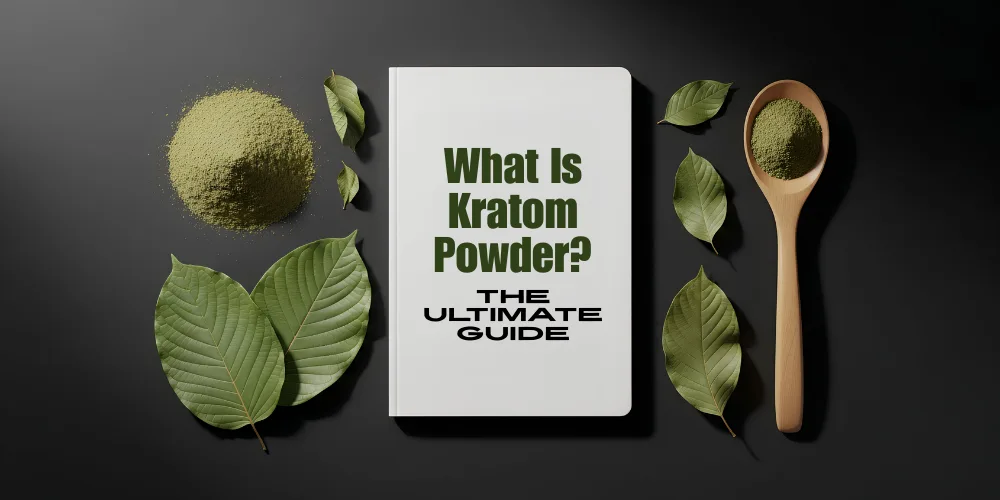
Kratom Powder is dried and finely ground leaf material from the tropical tree Mitragyna speciosa. It is the most traditional and widely available commercial form of Kratom and consists solely of processed leaf matter.
Kratom Powder originates primarily from Southeast Asia and is produced by harvesting, drying, and milling leaves into a consistent powder.
This guide explains the answers to many questions, like what is Kratom Powder, where it comes from, how it is produced, what it contains, how it differs from other formats, and the factors commonly considered when determining the best Kratom Powder.
At a Glance
- Botanical name: Mitragyna speciosa
- Plant family: Coffee family (Rubiaceae)
- Format: Ground dried leaves
- Origin: Southeast Asia
- Processing level: Minimal (drying + grinding)
What Is Kratom Powder Made From?
Kratom trees grow in tropical climates with high humidity and fertile soil. Commercial supply is primarily sourced from:
Climate, soil composition, harvesting season, and post-harvest handling influence the characteristics of the final leaf material.
Because Kratom Powder is derived from a plant, variability between harvests is expected.
How Is Kratom Powder Produced?
The production process generally includes:
1. Leaf Harvesting
Mature leaves are selected from the tree.
2. Drying
Leaves are dried indoors or outdoors. Environmental conditions during drying can affect final color classification.
3. Grinding
Dried leaves are milled into a fine powder using industrial equipment.
4. Filtering
Powder is sieved to ensure uniform texture.
5. Packaging
The finished product is sealed to reduce exposure to air and moisture.
The consistency of the grind is often used as a quality indicator.
What Is Found in Kratom Powder?
Kratom Powder contains naturally occurring alkaloids present in the leaf structure. Two commonly referenced compounds in research literature are:
- Mitragynine
- 7-Hydroxymitragynine
The overall alkaloid profile can vary due to agricultural conditions and processing techniques. Because Kratom is a botanical product, its composition is not standardized across all batches.
Types of Kratom Powder
Kratom Powder is typically categorized by color and regional naming conventions.
Color Classifications
These designations generally relate to leaf vein characteristics and drying processes rather than scientifically defined strains.
Regional Naming
Labels such as Borneo, Sumatra, and Maeng Da often reference cultivation regions or traditional trade names.
Read On: Best Kratom Strain- A Detailed Analysis
Kratom Powder vs Other Kratom Formats
| Format | Description | Processing Level |
| Kratom Powder | Ground dried leaf | Minimal |
| Capsules | Powder enclosed in a capsule shell | Added encapsulation |
| Extracts | Concentrated plant compounds | Higher processing |
| Blends | Mixed varieties | Combined material |
Kratom Powder remains the foundational format from which many other commercial products originate.
Also Read:
What Is the Best Kratom Powder?
There is no single universal definition of “best” Kratom Powder. Instead, quality is generally evaluated using objective standards.
Quality Criteria
Clear Labeling
- Botanical name (Mitragyna speciosa)
- Batch or lot number
- Net weight
- Business identification
Transparent Sourcing
- General origin disclosure
- Supply chain clarity
Consistent Texture
- Fine, uniform grind
- No visible foreign particles
Professional Packaging
- Airtight sealing
- Moisture-resistant materials
Red Flags To Avoid
- Missing batch identification
- No business contact details
- Exaggerated marketing claims
- Poor packaging integrity
In competitive markets, transparency and consistency typically distinguish higher-quality products.
Why Do Kratom Powder Differ Between Vendors?
Kratom Powder is influenced by multiple agricultural and processing variables:
- Soil composition
- Climate conditions
- Harvest timing
- Drying method
- Storage conditions
- Milling consistency
Because there is no global standardization system, two products with similar names may differ in appearance or texture.
Read More: How to properly store kratom
Final Overview
Kratom Powder is the dried and milled leaf of Mitragyna speciosa. It represents the most traditional commercial format and serves as the foundation for many other Kratom products.
Understanding “what is Kratom Powder” involves recognizing its botanical origin, production process, natural variability, and market classifications. When determining what is the best Kratom Powder, factors such as consistent texture, documented sourcing, and clear product information help distinguish one option from another.
Frequently Asked Questions About Kratom Powder
1. Why does Kratom Powder sometimes clump inside the package?
Clumping can occur when Kratom Powder is exposed to humidity or temperature fluctuations during storage or transit. Because it is finely milled plant material, it naturally absorbs moisture from the environment. Properly sealed packaging helps reduce this issue.
2. Does grind size matter in Kratom Powder?
Grind size can influence texture and consistency. A finer grind typically indicates more thorough milling and filtration, while a coarser grind may contain small plant fibers. Uniformity is often associated with professional processing standards.
3. Are all color classifications standardized across the industry?
No. There is no global regulatory authority that defines red, green, or white categories. These classifications are market-based and may vary between vendors depending on drying methods and naming conventions.
4. Can Kratom Powder oxidize over time?
Like many plant-based materials, Kratom Powder may undergo gradual changes if exposed to air, light, or moisture. Proper storage in airtight containers helps maintain consistency.
5. Is Kratom Powder considered raw or processed?
Kratom Powder is minimally processed. The leaves are dried and ground, but the plant material itself remains intact in powdered form. It is less processed than extract-based products.



0 Comments