White Kratom is one of the most widely recognized color classifications within the Kratom category, encompassing a diverse collection of regional and specialty strains sourced from Southeast Asia. From White Borneo and White Thai to White Horn and White Maeng Da Kratom, each category carries its own origin story, naming convention, and distinguishing characteristics. But this variety often confuses buyers, as most cannot differentiate between regional categories and specialty strains.
For such buyers, this guide explores what White Kratom is, how it is processed, how different White Kratom strains are categorized, and what separates popular options across the market. You’ll also find a breakdown of White Kratom powder, capsules, extracts, and key differences between White, Green, and Red Kratom classifications.
Table Of Contents
- What Is White Kratom?
- From Leaf to Powder: Harvesting and Processing of White Kratom
- Understanding The Alkaloid Profile Of White Kratom
- White Kratom Formats: Powder vs Capsules vs Extract
- White vs Red vs Green Kratom: Key Classification Differences
- White Kratom Categories Explained
- Where To Buy White Kratom Strains?
- Common Questions On White Kratom Strains
- White Kratom Guide: Quick Summary
What Is White Kratom?
White Kratom comes from Mitragyna speciosa, a tropical evergreen tree native to Southeast Asia. It is one of the three primary Kratom color classifications, alongside Green Kratom and Red Kratom.
White Kratom is identified by the lighter-colored veins present on harvested leaves and the processing methods used after collection. Today, the White Kratom category includes numerous regional and specialty varieties sourced from different growing areas across Southeast Asia, making it one of the largest and most recognized classifications within the Kratom market.
Why Is It Called White Kratom?
White Kratom gets its name from the pale or whitish central vein and stem of the Kratom leaf at the time of harvest. These leaves are typically collected earlier than fully mature Green or Red Kratom leaves, which have darker vein colors.
From Leaf to Powder: Harvesting and Processing of White Kratom
From freshly harvested leaves to finely milled powder, each stage of White Kratom production plays a role in shaping the finished product. Let’s take a look at how White strains are harvested and processed:
Early-Stage Leaf Selection
- White Kratom leaves are hand-harvested at an earlier growth stage, when the central rib shows a pale or whitish coloration.
- Only clean, intact leaves are chosen at this stage, helping maintain consistency from the source.
Washing And Secondary Sorting
- Freshly harvested leaves are rinsed to remove surface debris and environmental residue.
- After this, the leaves are sorted again to separate damaged, overly mature, or unsuitable plant material.
Controlled Indoor Drying
- Unlike red or green Kratom, white Kratom leaves are dried entirely indoors, away from direct sunlight, to preserve the alkaloid characteristics of this strain.
- Drying typically takes place in well-ventilated rooms or facilities over an extended period.
- No UV exposure during this stage protects the integrity of the leaf’s natural compounds.
No Fermentation Step
- White Kratom does not undergo the fermentation process used in some red Kratom production.
- The absence of fermentation is a key reason its alkaloid composition differs from red strains.
Grinding And Milling
- Once fully dried, the leaves are de-stemmed, prepared, and milled into fine White Kratom powder.
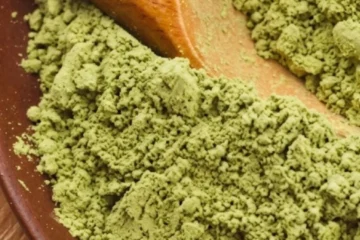
- The final powder usually appears light green to pale green, with the finished color coming from the dried leaf material rather than the original vein color.
Lab Testing And Quality Control
- Reputable producers test finished White Kratom powder for alkaloid content, microbial contaminants, heavy metals, and adulterants.
- After testing, the powder is screened for consistency before being packaged or prepared for Kratom capsules and other product formats.
Understanding The Alkaloid Profile Of White Kratom
Like all Kratom classifications, White Kratom contains naturally occurring alkaloids found within the Mitragyna speciosa plant. These compounds are present throughout the leaf and contribute to the plant’s overall chemical composition.
⭐ Primary Alkaloids:
- Mitragynine — The most abundant alkaloid in Kratom overall; white strains are notably high in mitragynine concentration relative to other vein types.
- 7-Hydroxymitragynine (7-OH) — Present in lower concentrations in white strains compared to red strains; this ratio is significant in determining the overall character of the strain.
⭐ Secondary Kratom Alkaloids Present in White strains: Speciociliatine, Speciogynine, Paynantheine, and Mitraphylline, along with a few other alkaloids as well.
What Influences White Kratom’s Alkaloid Composition?
Several factors contribute to the alkaloid profile of White Kratom, including:
- The genetic characteristics of the Kratom tree.
- Growing conditions such as climate, soil, and elevation.
- The stage of leaf development at harvest.
- Drying and post-harvest processing methods.
- Regional cultivation practices across Southeast Asia.
| 💡 Quick Kratom strain fact! Did you know? The high mitragynine-to-7-hydroxymitragynine ratio in white strains is a key factor that distinguishes them from red Kratom. Red strains, which are harvested later and often fermented, tend to have a higher proportion of 7-OH relative to mitragynine. Whereas, Green Kratom falls in between these two strains! |
White Kratom Formats: Powder vs Capsules vs Extract
If you’ve explored White Kratom before, you’ve likely come across powders, capsules, and extracts. But each format has its own benefits and drawbacks; let’s take a look at them so you can choose the best option for you.
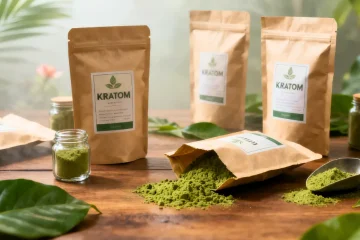
White Kratom powder
- What it is: Finely milled dried leaf material.
- Composition: Plain plant powder without any binders or fillers.
- Format: Available in small packs, larger bags, and bulk quantities.
- Convenience: Flexible and easy to portion; ideal for comparing quantities and bulk sizes.
White Kratom Capsules
- What it is: Pre-measured powder encased in a gelatin or vegetarian shell.
- Composition: Finely milled White Kratom powder inside a capsule shell.
- Format: Available in different capsule counts and bottle sizes.
- Convenience: Pre-portioned and portable; no equipment required.
White Kratom Extracts
- What it is: A processed product where Kratom’s alkaloids are concentrated through an extraction and reduction process.
- Composition: Extracted plant compounds prepared into concentrated products.
- Format: Available as liquids, powders, capsules, tablets, and shots.
- Convenience: White Kratom extracts come in compact bottle formats, which are generally easy to store.
💡 Know more about Kratom products:
- Kratom Extract vs Powder: What’s The Difference?
- Kratom Capsules vs Kratom Powder: Which One Is Right For You?
White vs Red vs Green Kratom: Key Classification Differences
Before exploring individual white kratom strains, let’s take a quick look at how White Kratom compares with the other two primary Kratom categories.
| Classification Basis | White Kratom | Green Kratom | Red Kratom |
| Harvest Timing | Early stage (youngest leaves) | Mid-stage (mature leaves) | Late stage (fully mature, oldest leaves) |
| Vein Color at Harvest | Light green to pale white | Deep green | Dark red, brown, or pinkish |
| Drying Methods | Dried completely indoors in darkness, followed by a brief period of outdoor sun exposure | Dried indoors with controlled airflow, followed by limited outdoor UV exposure | Fermented in sealed bags for several days before being dried under direct sunlight |
| Alkaloid Concentration | Moderate mitragynine levels; low levels of 7-hydroxymitragynine | High mitragynine levels; lowest relative levels of 7-hydroxymitragynine | Low mitragynine levels; the highest relative levels of 7-hydroxymitragynine |
| Three Popular Strains | White Maeng Da, White Borneo, White Sumatra | Green Indo, Green Bali, Green Elephant | Red Bali, Red Thai, Red Borneo |
White Kratom Categories Explained
Behind every White Kratom strain name is a story of origin, cultivation, and plant characteristics that help distinguish it from the rest of the category. Below is a list of White Kratom strains and key factors that differentiate them:
1. White Maeng Da
- Origin: Originally from Thailand; now primarily cultivated in Indonesia through grafting techniques.
- Name Significance: “Maeng Da” translates roughly to “pimp grade” in Thai; a term historically used to indicate premium quality strains.
- Defining characteristic: White Maeng Da Kratom is one of the most alkaloid-dense white strains available. It is produced from selectively bred, high-yield leaves.
| ⭐ Know more: What Is Maeng Da Kratom? |
2. White Borneo
- Origin: White Borneo Kratom is sourced from the dense, old-growth rainforests of Borneo Island, Indonesia.
- Name Significance: Named directly after its geographical source, Borneo, which is the third-largest island in the world.
- Defining characteristic: Grown in Borneo’s rich, humid, mineral-dense soil along with the river basin, which directly influences the alkaloid profile.
3. White Bali
- Origin: Grown in the fertile volcanic regions of Indonesia; historically shipped out of ports in Bali.
- Name Significance: Named after the island of Bali, which served as the main commercial shipping and trading hub for Indonesian exports.
- Defining characteristic: White Bali Kratom trees are cultivated primarily in Borneo regions which are known for producing broader, larger-than-average leaves that develop a well-rounded alkaloid profile.
| ⭐ Know more about Bali Kratom: Bali Kratom: A Guide To Strain, Colors, and Products |
4. White Thai
- Origin: Historically native to Thailand; currently grown in Indonesia using authentic Thai plant genetics.
- Name Significance: “Thai” directly references Thailand as the strain’s geographic and genetic place of origin.
- Defining characteristic: White Thai Kratom a chemical profile that combines a high concentration of the primary alkaloid mitragynine and a low concentration of secondary alkaloids.
| ⭐ Learn better about — White Thai Kratom |
5. White Indo
- Origin: Cultivated broadly across various agricultural regions of Indonesia, one of the largest modern Kratom-producing regions.
- Name Significance: “Indo” is the standard industry abbreviation for Indonesia, used to denote the country of origin.
- Defining Characteristic: White Indo Kratom functions as the foundational baseline white Kratom from Indonesia. Additionally, White Indo contains moderate levels of mitragynine and other trace alkaloids, such as Speciogynine and Paynantheine.
| ⭐ Read more on: What Is Indo Kratom? |
6. White Sumatra
- Origin: White Sumatra Kratom is cultivated on the island of Sumatra, Indonesia.
- Name Significance: Named directly after Sumatra, an island known for its rich, nutrient-dense volcanic soil.
- Defining Characteristic: Sumatran Kratom trees tend to produce larger leaves than those found in other regions, which contributes to a higher alkaloid yield per leaf.
| ⭐ Get to know: What Makes Sumatra Kratom Special? A Complete Guide |
7. White Malay
- Origin: White Malay Kratom is sourced from the high-humidity regions of Malaysia.
- Name Significance: “Malay” is short for Malaysian, which is a direct geographic reference to the strain’s region of botanical origin.
- Defining Characteristic: White Malay is distinguished within the white strain category for an alkaloid profile rich in corynoxine, mitraphylline, and paynantheine.
8. White Elephant
- Origin: White Elephant Kratom is cultivated primarily in the deep river basins of Indonesia.
- Name Significance: Named “Elephant” due to the massive, broad, and floppy shape of the leaves, which resemble an elephant’s ears.
- Defining Characteristic: Rich alkaloid content as compared to other Kratom strains due to the larger oversized leaf size.
| ⭐ Read more: White Elephant Kratom Guide: Key Characteristics And Background |
9. White JongKong
- Origin: White JongKong Kratom is sourced strictly from the remote Kapuas River Valley within the JongKong region of Indonesia.
- Name Significance: Named specifically after the JongKong district in West Kalimantan.
- Defining characteristic: Grown in deep swamp conditions, yielding a rare alkaloid profile combining high concentration of mitragynine and other trace alkaloids like Speciogynine.
10. White Vietnam
- Origin: Vietnam, particularly along the Mekong River delta and highland regions.
- Name Significance: Named after Vietnam, referencing the historical geographical origin of this specific river basin.
- Defining characteristic: The distinct soil composition of the Mekong region gives this leaf a unique mineral density compared to inland jungle strains.
11. White Hulu Kapuas
- Origin: The Hulu Kapuas region of West Kalimantan, Indonesian Borneo, is named after the Kapuas River.
- Name Significance: “Hulu” translates to “headwaters” or “upstream” in Indonesian, indicating that the leaves are picked strictly from forests located at the source of the Kapuas River.
- Defining characteristic: White Hulu Kapuas Kratom is noted for a well-rounded alkaloid profile shaped by its unique river ecosystem and cultivation region.
12. White Kalimantan
- Origin: Sourced from the Indonesian territory on the island of Borneo.
- Name Significance: “Kalimantan” is the native Indonesian name for their portion of the island.
- Defining characteristic: Kalimantan’s vast lowland rainforests and river systems support a high-yield alkaloid composition.
13. White Horn
- Origin: Cultivated in selective micro-regions of the Indonesian rainforest.
- Name Significance: Named for the distinctive horn-like spiky protrusions found on the edges of the leaves, a naturally occurring genetic variation in certain Kratom trees.
- Defining characteristic: Among all white kratom strains, White Horn Kratom is the only one defined by a physical leaf characteristic rather than geographic origin alone.
| ⭐ Know more: White Horn Kratom Guide: Everything To Know About This Distinct Strain |
14. White Dragon
- Origin: White Dragon Kratom is a blended strain, typically a combination of White Maeng Da and White Elephant Kratom.
- Name Significance: A proprietary industry name chosen by vendors to represent a premium blend.
- Defining characteristic: Unlike the other single-origin strains, this is a strict hybrid creation made by precisely mixing White Maeng Da with Green Elephant powder.
| ⭐ Read more on: Dragon Kratom: Types, Profile & What To Know? |
15. White Sunda
- Origin: Sourced from the Sunda Islands group within the Indonesian archipelago.
- Name Significance: Named directly after the Sunda Islands (specifically the Greater Sunda region), a major geographic grouping in maritime Southeast Asia.
- Defining characteristic: Harvested from older trees growing in deep, humid island interiors, resulting in leaves with exceptionally thick cell walls that contain high baseline concentrations of mitragynine.
| ⭐ Read more on: Best White Kratom Strains That Are a Must Try |
Where To Buy White Kratom Strains?
White Kratom strains are available through both offline shops and online vendors, but product variety, package sizes, and format options can differ widely. For buyers looking for high-quality White Kratom powder, capsules, and bulk sizes, Buy Kratom Bulk USA offers a broader selection of White Kratom strains across multiple forms, making it easier to compare options and shop by your preferred quantity, format, and strain category.
Common Questions On White Kratom Strains
1. White vs Green Kratom: What Is The Main Difference?
White Kratom is harvested early in the plant’s life cycle when the leaf veins are white. Green Kratom is harvested later in the cycle when the leaves have reached full maturity and the veins turn green.
2. What Is The Best White Kratom Strain?
There is no single “best” White Kratom strain. White Maeng Da, White Borneo, White Thai, White Horn, and White Elephant are among the most widely recognized and commonly available White Kratom categories.
3. Is White Dragon Kratom Naturally Occurring?
No, White Dragon Kratom is not a naturally occurring strain found on a single tree. It is a commercial, vendor-made blend created by mixing White Maeng Da and White Elephant powders together.
4. How Should White Kratom Strains Be Stored?
White Kratom strains do not require special storage, but they should be kept in airtight packaging away from heat, moisture, sunlight, and strong odors. Proper storage helps maintain powder texture, color, and overall product quality.
| ⭐ Learn more on Kratom storage: Where And How To Store Your Kratom Correctly? |
White Kratom Guide: Quick Summary
- White Kratom is a major Kratom color classification identified by lighter leaf veins and specific post-harvest processing methods.
- The category includes regional strains, leaf-shape-based strains, and specialty trade names, giving it a broad and varied lineup of strains.
- White Kratom is commonly available in powder, capsule, and extract formats, each with different packaging and convenience factors.
- Harvesting stage, drying method, and regional cultivation practices all help shape how White Kratom products are categorized.
- For buyers comparing White Kratom strains, checking product format, lab testing, package size, and vendor transparency can make the selection process clearer.
Disclaimer: This article is intended for informational and educational purposes only. It does not constitute medical, health, or professional advice. Kratom laws and regulations may vary by location. Readers should independently verify applicable laws before purchasing or possessing Kratom products.
Buy Kratom Bulk USA makes no representations regarding the suitability of any product for a particular purpose. All product information is provided solely to describe strain classifications, origins, processing methods, and product characteristics.


0 Comments